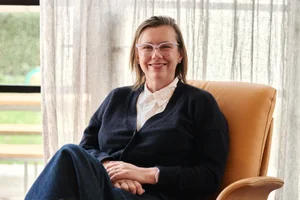
By Sarah Sacks | Psychotherapist & Clinical Supervisor
On movement, mindfulness and the value of taking therapy outdoors
I grew up in the country, where life was shaped by the seasons, the weather and the natural world around us. There was an understanding that some things were simply beyond our control. Conditions changed, plans were interrupted, and life continued to unfold in its own way.
Perhaps this is where my appreciation for nature began. Not just for its beauty, but for its unpredictability, its capacity for renewal, and the quiet reminder that nothing stays the same.
It's also part of what draws me to Walk & Talk therapy.
Traditionally, we imagine therapy taking place in a room, with two people sitting opposite one another. There is enormous value in this, but stepping outside can offer something different. Walking side by side changes the dynamic. Conversation can feel less intense, silences more comfortable, and there is a natural rhythm to moving together that can make difficult experiences easier to approach.
And importantly, we bring the body into the conversation.
Moving through experience
We can spend a great deal of time trying to understand ourselves through thinking. We analyse our reactions, revisit conversations and search for explanations for why we feel or behave as we do. Yet understanding something intellectually doesn't always change how we experience it.
Our emotional lives are not confined to our thoughts. They are also expressed through our bodies, in our breathing, posture, movement and the sensations that accompany different feelings.
Walking offers a gentle way to bring awareness to these experiences. As we move, we might notice tension beginning to ease, a change in our breathing, or an emotion becoming more accessible. Sometimes the rhythm of walking helps us find words for something that has been difficult to express.
Research into outdoor psychotherapy has begun to explore these possibilities. A review of 38 articles by Cooley and colleagues (2020) identified themes of greater freedom of expression, connection with the body and a different quality of therapeutic relationship when sessions took place in natural environments.
The research is still developing, but it reflects something valuable about the experience of moving alongside another person. Therapy doesn't always need to be still to create the conditions for reflection.
The opportunity to slow down
One of the paradoxes of walking is that movement can help us slow down.
So much of our daily life is spent anticipating what comes next, attending to responsibilities or revisiting what has already happened. We can become so absorbed in our thoughts that we lose touch with what is happening within us.
Nature offers gentle invitations to return to the present. The sound of birds, the movement of trees, the changing light or the sensation of our feet meeting the ground can bring our attention back to where we are.
These moments of noticing are a form of mindfulness. Not necessarily the formal practice of meditation, but the simple act of paying attention to our experience with curiosity, rather than judgement.
And nature has a way of putting things into perspective. There is beauty in its unpredictability, in the way things grow, change and eventually give way to something else. Nothing remains quite as it is. Being surrounded by this can be a gentle reminder that uncertainty and change are part of life, rather than something we always need to resist or resolve.
In therapy, this openness to what is happening can be particularly valuable. We might notice what happens in the body as we speak about something difficult, or become aware of an emotion before rushing to explain it. Sometimes we stop walking altogether, allowing time to stay with whatever has emerged.
There is also growing evidence that time spent in natural environments can support psychological wellbeing. Research by Bratman and colleagues (2015) found that walking in nature reduced rumination, the repetitive negative thinking often associated with anxiety and depression. A later systematic review by Grassini (2022) also found evidence that nature walks can help reduce symptoms of anxiety and depression.
These findings don't mean that a walk replaces psychotherapy. Rather, they suggest that the natural environment may offer something additional to the therapeutic process, supporting our capacity to settle, reflect and connect with ourselves.
Taking therapy outdoors
Walk & Talk therapy brings together many of the things I value in psychotherapy: the importance of relationship, awareness of the body, curiosity about our inner experience, and the opportunity to slow down enough to notice what is happening.
It isn't about walking for fitness or finding solutions along the way. Nor is it necessarily suitable for everyone. Privacy, accessibility, the environment and the needs of the individual all need consideration.
Rather, it offers another way of creating space for therapeutic exploration, where movement and nature can become part of the process.
Sometimes we talk. Sometimes we walk in silence. Sometimes we stop to notice something around us, only to discover that it reflects something happening within.
And perhaps that's part of the value of taking therapy outdoors. Away from the usual demands and distractions of daily life, we have an opportunity to reconnect with ourselves, to become more curious about our experience, and to allow a little more space for whatever is present.
It is through connection we heal (and that includes with nature).
Love Sarah xx
I offer Walk & Talk therapy in Melbourne, where it is clinically appropriate, alongside online individual therapy across Australia. If you're curious about whether working outdoors might suit you, you're welcome to arrange a free 20-minute discovery call.